America250: Fifty-year BNSF employees have watched railroading evolve
By SUSAN GREEN
Staff Writer
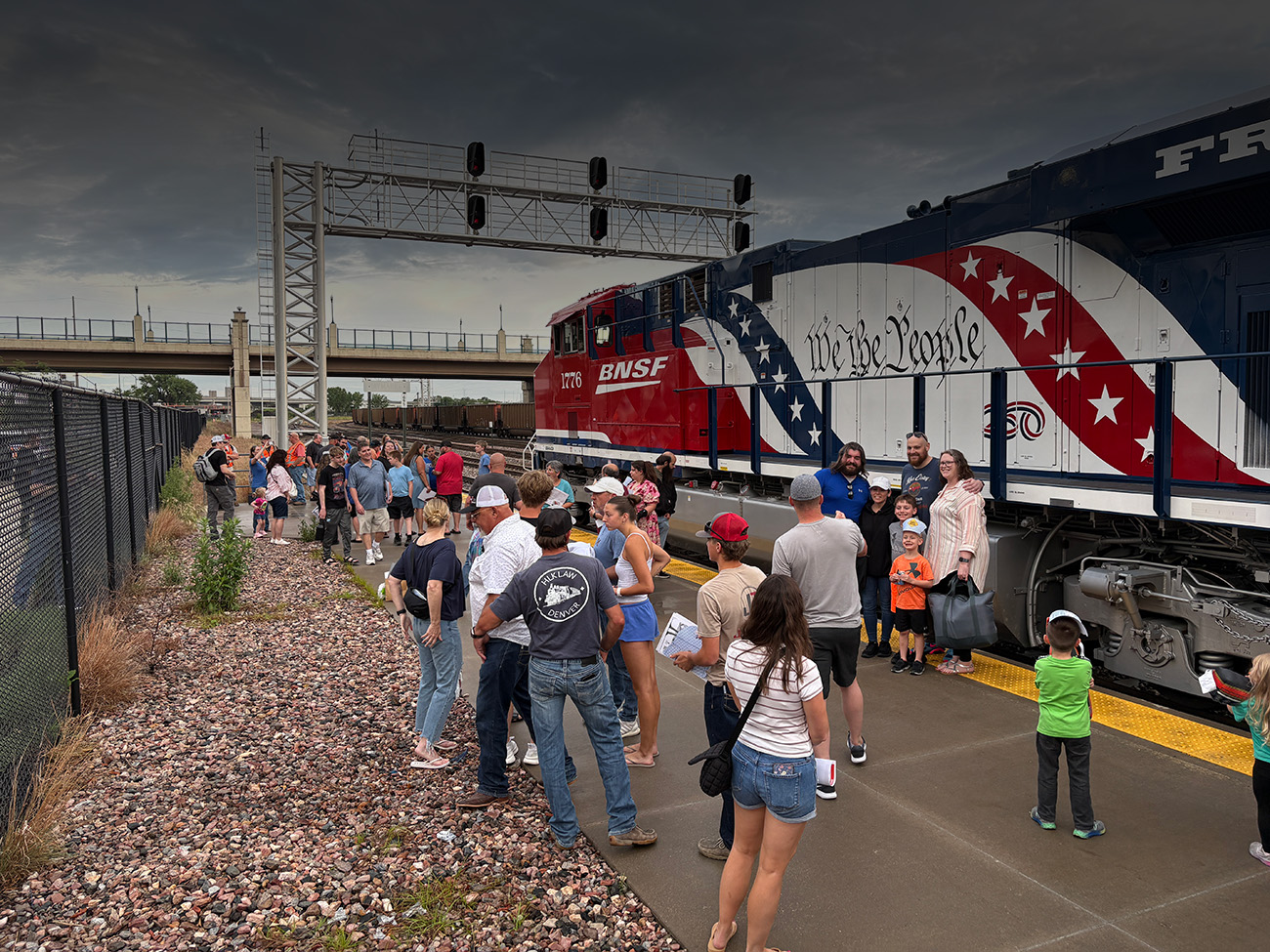
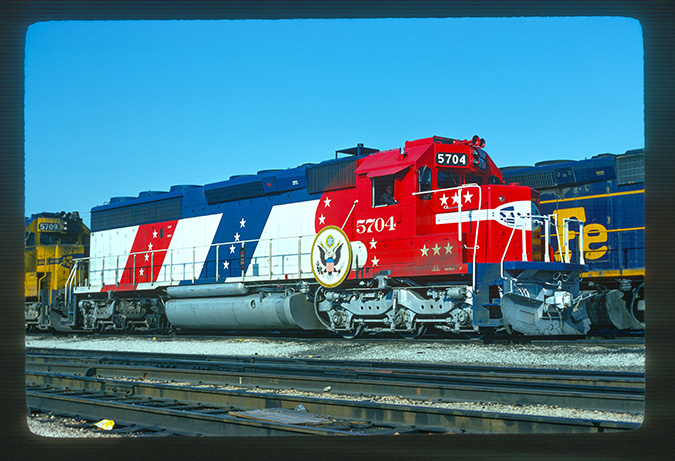
They’ve been workin’ on the railroad all the live-long day for 50 or more years – a bit more than the average 15-year tenure of other BNSF employees. About a dozen were with the railroad during America’s Bicentennial in 1976, when several predecessor locomotives were painted in patriotic colors.
They’re still at work, keeping today’s trains running. They’ve seen the U.S. freight rail industry grow from one that was teetering on the edge of bankruptcy in the 1970s to one that was partially deregulated and is now flourishing. They've seen technology make jobs smarter and safer and they’ve also watched new services and partnerships revolutionize the global supply chain.
These railroaders have been part of the industry for a quarter of its history and one-fifth of our nation’s existence. We asked three, a locomotive engineer, a track construction worker and a carman, what keeps them on the railroad?
While modest about the role they’ve played in BNSF’s and its predecessors' success, the bottom line for each is that it's a great place to spend their career.
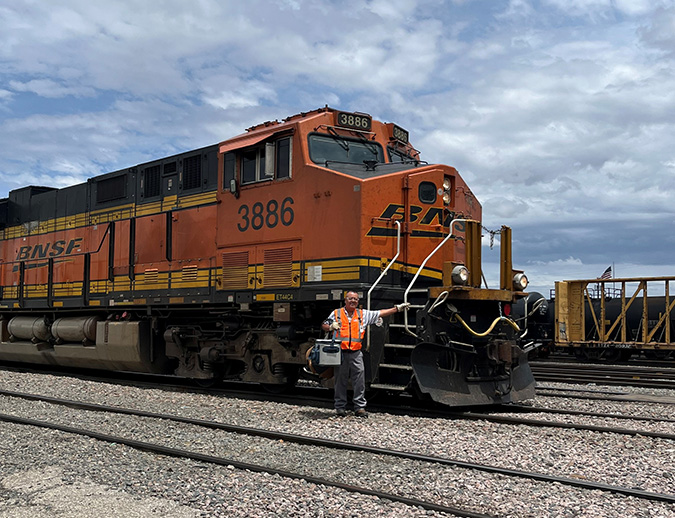
Ray Barbosa, locomotive engineer, Amarillo, Texas
When Ray Barbosa hired on in 1974 as a brakeman, there were five crew on board: the engineer, a conductor, two brakemen and a fireman. The caboose acted as the conductor’s office. Back then if the locomotive had air conditioning, they were lucky.
Today, there are two in the cab, the engineer and conductor. Cabooses were phased out in the 1980s when end-of-train devices were introduced. Air conditioning in the cab is now standard.
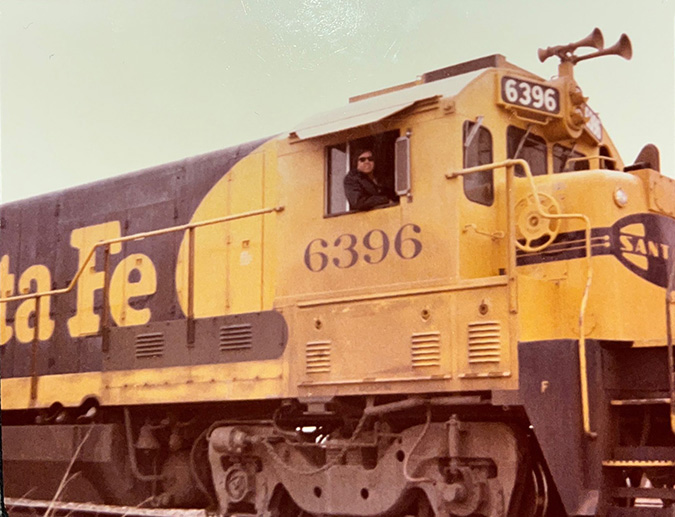
“Our world is changing and will change more whether we like it or not," Barbosa said. “Some of the changes were tough at first, but technology has made it so much safer.”
When Barbosa was promoted to locomotive engineer, training was relatively brief, with written and oral tests. Today’s robust training program includes high-tech simulators. New hires are now trained at BNSF’s Technical Training Center.
Barbosa jokes that testing on simulators is different from the way he came up.
“It’s because I was taught to get a ‘feel’ for how I’m doing in the seat of the locomotive," he said. “I still could run the train manually, if I had to.”
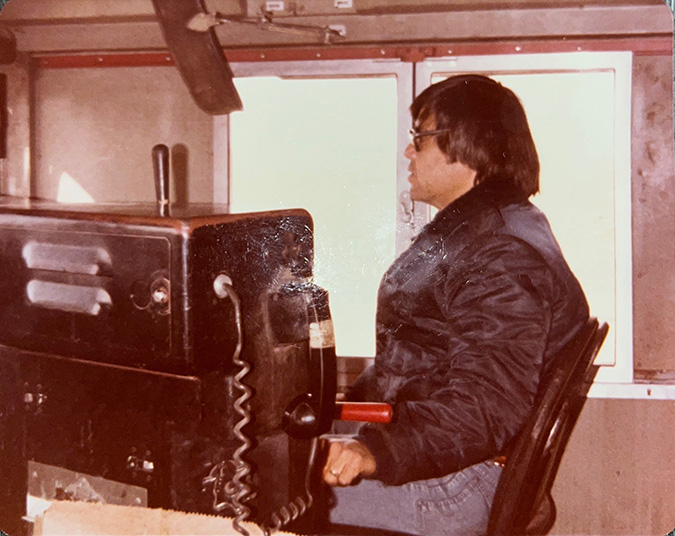
Barbosa operates trains on our busy Southern Transcon route. His portion runs between Amarillo and Belen, New Mexico, and then back in the other direction after he’s rested.
“I’ve learned every bit of it,” he said of his territory. “If I had to go into fog or snow, I’ll always know where I am.”
When on a train, he likes to talk to the engine.
“Others may call me Crazy Ray, but it doesn’t bother me,” said Barbosa, who is qualified as an engineer until 2028. “I feel free in a locomotive. The railroad became my life, and I love it. It’s a fun and exciting job.”
Ron Sedersten, construction gang, Lincoln, Nebraska
When Ron Sedersten hired on with predecessor Burlington Northern (BN) in 1974, he didn’t know the steel gang work he would do was referred to as “gandy dancing.” That made him and brother Robert, who was hired the same day, "dancers."
The dancing refers to the synchronized way they worked together and found their rhythm.
All this work was done by hand, including hoisting pry bars to lever heavy steel rail.
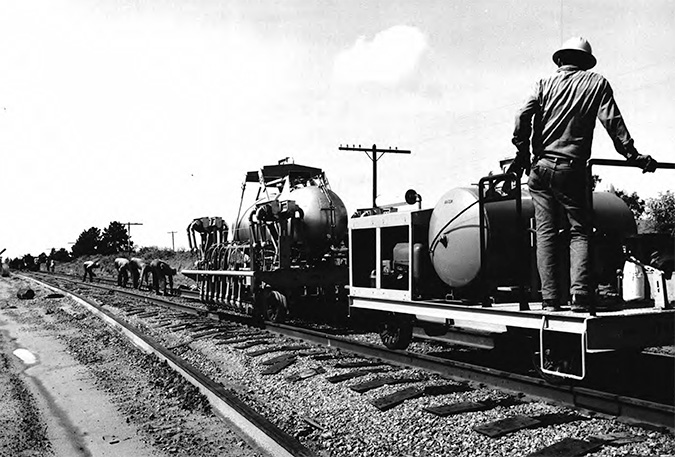
“Everything was manual then, with no machines, no hydraulics or battery-powered equipment,” Sedersten recalled. “We didn’t have a training center, you learned as you go.”
Turns out, the hands-on part of the job is what he still likes most about it.
“I like being active, and I tell others, ‘If you want to do what we do, you have to love being active and outdoors,’” he said.
Today, Sedersten is part of a traveling construction gang out of Lincoln, Nebraska, that lays track panels at crossings, puts in new switches in yards or tackles other maintenance-related projects.
“It’s the same work I did, but now we have tools to make it faster and safer,” he said.
Sadly, Sedersten’s brother passed away in 1998, and Ron is probably one of the last from that original gandy dancing crew.
“I still love everything about my job,” he said. “It’s almost like family.”
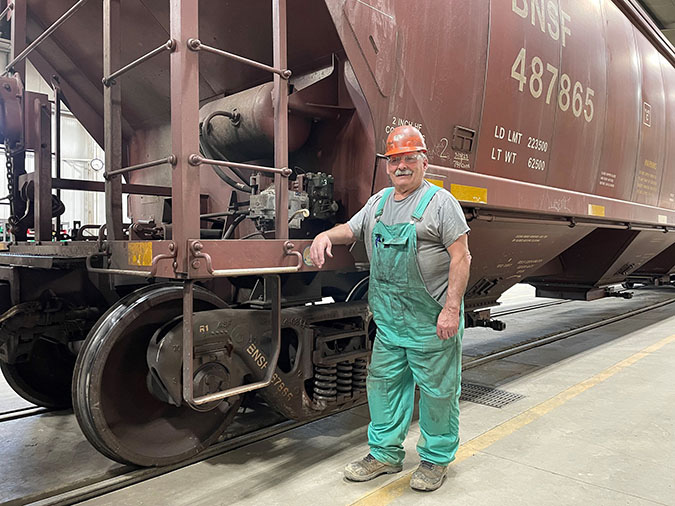
Don Eslinger, carman, Minot, North Dakota
At the age of 19, Don Eslinger reported for his first day on the job as a carman with BN. His duties were and still are to inspect, maintain, and repair railcars.
“I’d always heard that the railroad was a good place to work,” he said. “I liked the work and the people, so here I am, still mostly in the yard.”
After his hiring in Minot, Eslinger spent 12 years in Mandan, North Dakota, before a couple of short stints in Glendive, Montana, and Aberdeen, South Dakota. Then he accepted a road truck job back in Minot.
While the tasks involved in his work have stayed essentially the same since he hired on in 1974, evolving tools have made the work safer.
“There’s more work these days, but the [freight car] components themselves haven’t changed,” he said. “Because of the tools, the work is also less physical.”
When it comes to safety, Eslinger makes it a point to help new hires learn the ropes.
“I’m trying to teach them like someone did for me,” he said. “Everything is big on the railroad, and you don’t want to see someone get hurt. I remind them to watch what they’re doing, don’t get in a hurry, and do the job right.”
As he contemplates retirement, Eslinger hopes he’s left a positive mark on his coworkers, including his son Jason.
“Teaching them when they’re new hires how to do inspections and repair defects is important because they don’t know how,” he said. “But they learn.”
To these three and all our employees who’ve been with BNSF for decades, thank you for all you do to safely and consistently move the goods America counts on us to deliver!
NOTE: The historical photos in this story were in compliance with the safety rules of the time.